Clean Concept of Customer Feedback: A Practical Guide to Gathering and Using Honest Insights
Customer feedback is one of the most valuable assets any organization can collect, but not all feedback approaches deliver the same clarity. Many methods bury useful signals under noise, leading teams to act on incomplete or misleading data. The Clean Concept of Customer Feedback offers a contrasting philosophy—one that strips away extraneous elements to surface what customers actually mean. Whether you are evaluating a new feedback tool, redesigning a survey process, or simply looking to improve how you interpret testimonials, understanding this approach can shift how you collect, present, and act on customer opinions.
At its core, the Clean Concept of Customer Feedback prioritizes simplicity, directness, and visual clarity. Instead of layering complex rating scales, lengthy open-ended questions, or cluttered presentation formats, this method focuses on capturing the essential voice of the customer with minimal interference. A clean feedback process typically uses short prompts, neutral language, and straightforward response options. The output—whether displayed as a social media template, a testimonial card, or a web banner—avoids unnecessary decoration, making the customer’s words the centerpiece.
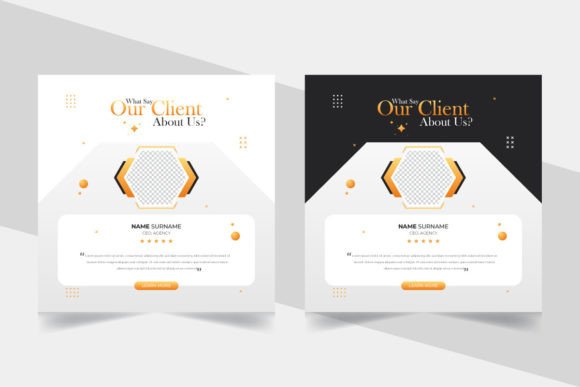
What makes this concept distinct is its deliberate restraint. Many feedback systems try to gather everything at once: sentiment scores, demographic tags, behavioral data, and qualitative commentary. While that breadth can be useful, it often dilutes the core message. The Clean Concept of Customer Feedback works differently. It asks, “What is the one thing the customer is truly saying?” and then presents that message without distraction. For instance, a testimonial post designed under this concept might feature a customer quote in a large, readable font, a simple color palette, and generous white space—no excessive icons, brand overlays, or multi-column layouts. The result is a piece of content that feels trustworthy and easy to digest in seconds.
Compared with other popular feedback formats, the clean concept occupies a distinct space. Traditional survey tools like Likert-scale questionnaires or NPS dashboards provide quantitative structure but can feel impersonal. On the other end, informal feedback methods such as social media comments or review snippets offer authenticity but lack consistency. The Clean Concept of Customer Feedback bridges this gap. It retains the authenticity of raw customer language while packaging it in a format that is both visually consistent and easy to compare across different responses. This makes it especially useful for teams that want to publish customer testimonials on websites, social media, or marketing materials without heavy editing or redesign each time.
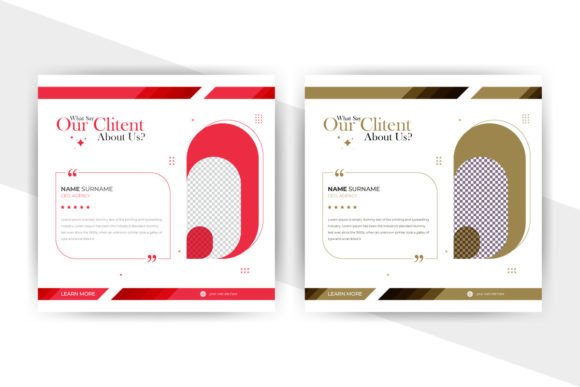
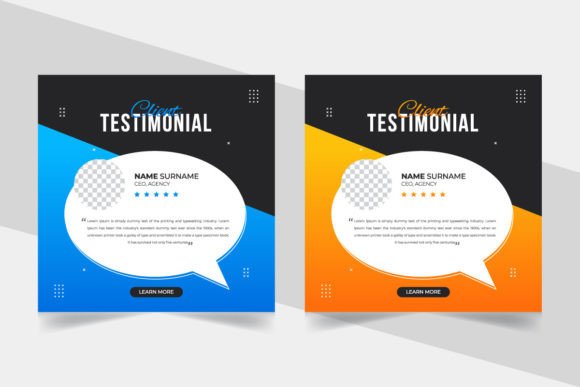
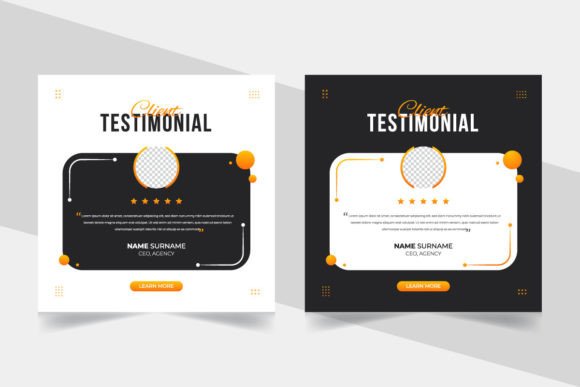
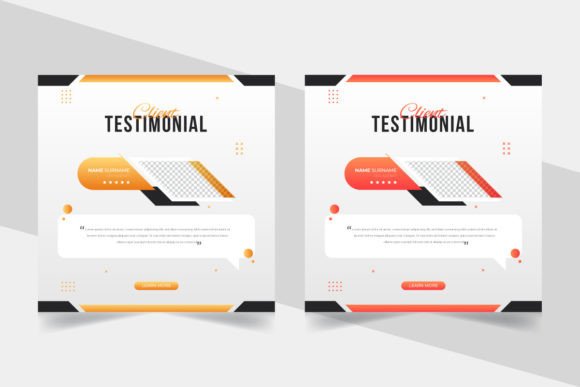
One practical example is the creative customer service feedback review or testimonial social media post built with a clean concept approach. Imagine a 1200×800 pixel web banner that uses RGB color mode, a fully editable vector template in Adobe Illustrator EPS format, and free fonts. The design keeps all objects, colors, and text editable, so a non-designer can swap out a customer quote, change a color variation, or adjust the layout without breaking the composition. The clean concept here means that every visual element serves a purpose: the color variation supports brand identity without overwhelming the quote, and the generous canvas size gives the testimonial room to breathe. For a small business owner or a marketing coordinator comparing template options, this type of file offers both professional polish and practical flexibility.
Strengths of the Clean Concept of Customer Feedback include faster comprehension, higher visual trust, and easier reuse across channels. When customers see a clean testimonial, they tend to read the quote rather than skip over it. The lack of clutter signals confidence—the brand is letting the customer speak without needing to embellish. For teams that manage high volumes of feedback, the clean concept also reduces the time spent formatting and reformatting content. A single editable template can be adapted for LinkedIn, Instagram, a website banner, or a printed flyer with minimal effort.
However, this approach has tradeoffs. The emphasis on simplicity can mean leaving out context that some decision-makers need. A clean testimonial might not include the customer’s industry, role, or specific use case—details that help other prospects evaluate fit. If you rely entirely on clean concept templates, you risk presenting feedback that feels generic or too brief to be persuasive. Additionally, the visual minimalism that works well for a social media post may not suit more data-heavy internal reports where stakeholders expect trend lines, benchmarks, or comparative scores.
The fit of the Clean Concept of Customer Feedback depends heavily on your use case. For external-facing content—social proof, landing page testimonials, email campaigns—the clean approach is often ideal. Audiences aged 20 to 50 who are comparing products or services tend to respond well to straightforward quotes that feel genuine. They are used to scanning content quickly, and a clean presentation respects that behavior. Conversely, if your goal is to conduct deep product research, segment feedback by persona, or track sentiment over time, you will likely need a more layered system that captures additional metadata alongside the customer’s words.
Another factor to weigh is your team’s design capacity. The Clean Concept of Customer Feedback, when applied to templates, assumes you have access to editable vector files and a basic understanding of color modes like RGB versus CMYK. The 1200×800 pixel size mentioned in many clean concept templates is standard for web and social use, but if you need to print large format materials, you may need to adjust resolution or convert files. The fully editable nature of tools like Illustrator EPS files is a strength for those who know how to use them, but a limitation if your team relies on simpler drag-and-drop platforms. In that case, a clean concept approach may still work—you just need to choose a template format that matches your skill level.
When comparing the Clean Concept of Customer Feedback to other approaches, consider what you want the feedback to do. If the primary goal is to build trust with prospective customers through authentic voice, the clean concept outperforms more complex systems. If the goal is to diagnose product issues or prioritize feature requests, then a structured survey with categorical responses may serve you better. The best solution is often a hybrid: use clean concept templates for external storytelling, and keep a more detailed feedback database for internal analysis.
Realistic decision factors include your brand’s visual identity, the volume of feedback you need to publish, and the technical skill of your team. A clean concept approach works well for brands that already favor minimal design, but it can feel mismatched with a loud or colorful brand aesthetic. That said, many clean concept templates include color variations precisely to bridge this gap—you can maintain brand recognition while keeping the layout simple. The key is ensuring that the customer’s voice remains the focus, not the decoration.
To illustrate, consider two scenarios. In the first, a SaaS startup wants to feature customer quotes on its homepage. They choose a clean concept template, adjust the colors to match their brand, and rotate quotes weekly. Visitors consistently comment that the testimonials feel honest and easy to read. In the second scenario, a retail brand wants to aggregate feedback from hundreds of stores to identify service gaps. Using a clean concept template for that purpose would be inefficient because the format prioritizes individual stories over aggregated data. The brand would be better served by a survey tool that compiles scores and trends, then perhaps repackage the most compelling quotes into a clean concept banner for marketing.
The Clean Concept of Customer Feedback is not a one-size-fits-all solution, but it offers a disciplined framework for turning customer words into compelling content. When you strip away complexity, you often uncover what matters most. For marketers, product managers, and business owners who regularly present customer feedback to external audiences, this approach provides a reliable way to communicate value without noise. As you evaluate your own feedback practices, consider where clarity is most needed and whether a cleaner presentation could help your customers’ voices reach further.
Ultimately, the choice comes down to alignment. If your brand values transparency and your audience responds to straightforward communication, the Clean Concept of Customer Feedback provides both a philosophy and a practical toolkit. The templates available—whether in EPS format with editable objects, RGB color mode for digital display, or free fonts for cost-conscious teams—are designed to make implementation accessible. By focusing on what the customer actually said and presenting it without distraction, you create feedback content that respects both the speaker and the reader.
For anyone exploring options, it is worth testing a clean concept template against your current approach. Compare how quickly viewers grasp the message, whether they engage with the quote, and how the content performs across different channels. The feedback you collect about your feedback process may surprise you—and it might point you toward a cleaner path forward.