Housely – Rent Real Estate App UI Kit: A Modern Toolkit for Property Listings
In the competitive world of real estate technology, a polished and intuitive user interface can make the difference between a user downloading your app or moving on to a competitor. Whether you are a startup founder looking to launch a rental platform, a freelance designer building a property listing app, or a real estate agency modernizing its digital presence, the visual foundation of your application matters immensely. That is where Housely – Rent Real Estate App Ui Kit steps in. This Figma‑based design kit offers a complete, ready‑to‑use set of screens and components tailored specifically for the rental and real estate market. In this article, we will explore what makes Housely stand out, its practical features, the scenarios in which it shines, and how to decide if it fits your project.
What Is Housely – Rent Real Estate App Ui Kit?
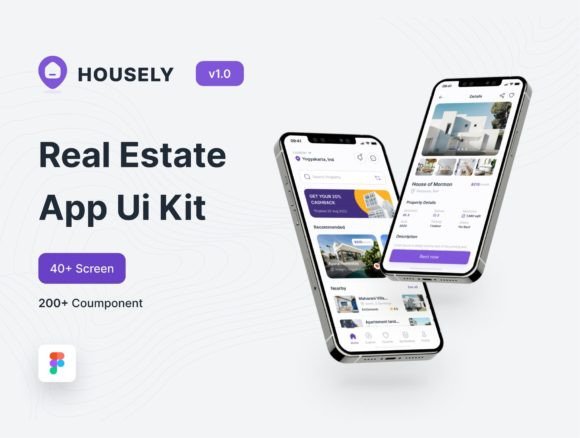
Housely is not just a collection of pretty screens; it is a comprehensive UI kit built in Figma that provides everything needed to prototype and design a modern real estate application. The kit focuses on the rental experience — searching for a home, browsing listings, viewing property details, and connecting with landlords. The design philosophy behind Housely is clean and modern, with an emphasis on clarity and ease of navigation. Because it is created in Figma, you benefit from the collaborative power of that tool, including component variants, auto layout, and easy handoff to developers.
One of the first things you will notice is that Housely comes with 45 pages covering a wide range of flows. From onboarding and search results to property profiles, booking requests, and user account settings, the kit aims to provide a complete user journey. All screens are designed in a light theme, which keeps the interface airy and approachable — a common preference for real estate apps where photos and visual content take center stage.
Key Features and Characteristics
When evaluating any UI kit, it is not enough to just count the number of screens. What matters is how well those screens work together, how easy they are to customize, and whether the underlying components support your real‑world needs. Housely delivers on several fronts:
- Variant Features for Customization: The kit leverages Figma’s variant system for buttons, input fields, cards, and other components. This means you can toggle between states (default, hover, pressed, disabled) without duplicating elements. Editing is straightforward — change colors, text, or shapes across all instances in seconds.
- Pixel‑Perfect Precision: Every screen is designed with meticulous attention to spacing, alignment, and typography. This precision reduces the friction when handing off to developers, because measurements and proportions are consistent throughout the kit.
- Highly Organized Layers and Files: Clean naming conventions, nested groups, and clearly separated sections make it easy to find whatever you need. Whether you are a solo designer or part of a team, you will appreciate not having to dig through a messy layer panel.
- Free Amazing Font: Housely includes a carefully chosen font that complements the modern aesthetic. Using a free font means you have no licensing worries, and the typography hierarchy is already established for headings, body text, and captions.
- Supporting Components: Beyond full screens, the kit provides reusable atoms — icons, tabs, sliders, rating stars, map elements, and more. These building blocks allow you to construct new pages quickly without starting from scratch.
These characteristics make Housely particularly attractive for teams that need to iterate fast. Instead of spending hours designing a property detail card from the ground up, you can grab an existing one and adjust the images, labels, and call‑to‑action buttons to match your brand.
Who Benefits from Housely and Where Can It Be Used?
Because Housely is a general‑purpose rental real estate UI kit, it suits a broad audience. Here are the most common groups and scenarios:
Freelance Designers and Small Agencies
If you are a designer juggling multiple projects, Housely gives you a head start on any real estate client’s work. You can present a near‑complete prototype in a fraction of the time it would take to design every screen from scratch. The organized file structure also means you can hand over the Figma file to your client or developer with confidence.
Startups Building a Rental Platform
A lean startup needs a functional MVP quickly. Using Housely, a product team can map out the core user journey — search, view listings, contact landlord, save favorites — without investing weeks in UI design. The kit’s 45 pages cover most essential flows, so you can test user reactions and iterate based on feedback.
Real Estate Agencies Expanding Digitally
Traditional agencies moving into the app space often have limited in‑house design resources. Housely provides a professional look that reassures users they are dealing with a credible brand. The kit can be adapted to match existing brand colors and logos, and the inclusion of map views and property details aligns perfectly with what home seekers expect.
Students and Educators
For those learning UI/UX design, Housely offers a realistic case study of a modern app. You can dissect the components, understand how variants work, and practice customizing a real‑world interface. It’s a practical learning tool that demonstrates industry‑standard design patterns.
Real‑world applications go beyond just “making an app.” For instance, a property management company might use Housely to prototype a tenant portal for rent payments and maintenance requests. A real estate blogger could create a mobile‑friendly listing showcase. The kit’s flexibility makes it applicable to any scenario where people search for, view, or interact with rental properties.
Strengths and Considerations
No product is perfect for everyone. Below we weigh the strengths against a few considerations to help you decide if Housely matches your project’s needs.
Strengths
- Speed of development: With 45 ready‑made pages, you can move from concept to prototype in days, not weeks.
- Figma‑native features: Variants, auto layout, and component libraries mean your design remains consistent and easy to update.
- Clean aesthetic: The light‑theme, minimalist style reduces visual noise and highlights property photos — exactly what a real estate app should do.
- Pixel perfection: No messy alignments or inconsistent spacing; the kit feels polished out of the box.
- Clear documentation (via organized layers): Even without a separate manual, the file structure guides you through the intended use of each element.
Considerations and Limitations
- No dark theme included: Housely provides only light themes. If your brand requires a dark mode, you will need to adjust all screens manually. While Figma makes global color changes possible, it still takes time.
- Real estate‑specific focus: The kit is specialized. It will not be suitable for non‑property projects without significant reworking of the content and structure.
- Dependence on Figma: Although Figma is widely used, if your team works in Sketch or Adobe XD, you will need to convert the file (which may lose some variant functionality).
- Licensing for commercial use: Always check the exact license terms that come with the kit. While generally permitted for commercial projects, some kits require attribution or restrict redistribution.
Understanding these points helps you set realistic expectations. For most rental app projects, the pros far outweigh the cons, especially if you value speed and a coherent design system.
Practical Expectations: What It’s Like to Work with Housely
When you download and open the Housely file in Figma, the first impression is one of order. The file is broken into logical sections: onboarding, authentication, home search, property details, booking, messaging, profile, and settings. Each section contains full‑screen frames and a separate “Components” page where you find the building blocks.
Customizing colors is a breeze thanks to Figma’s local styles. You can update the primary palette in one place, and every button, card, and navigation bar updates instantly. The same goes for typography. The included font is already applied to all text layers, so you simply swap it out if you need something else.
One particularly useful aspect is the use of variants for common patterns. For example, the property card component lets you toggle between a “featured” badge, a “sold” overlay, or different image counts. This sort of flexibility means you can create realistic prototypes without duplicating work.
For developers, the handoff is cleaner because the file uses real text and vector icons (no static images for UI elements). Developers can inspect spacing, export SVGs, and directly read layer names that match the components they will code. This reduces back‑and‑forth during implementation.
How to Evaluate Whether Housely Fits Your Project
Before committing to any UI kit, it pays to ask a few targeted questions. Use the following guidance to make an informed decision:
- What is your project’s scope? If you are building a simple property showcase with only a few pages, Housely might be overkill. But if you plan to include search filters, user accounts, messaging, and booking, the kit’s 45 pages will save you immense time.
- How much do you rely on uniqueness? Out‑of‑the‑box UI kits can sometimes look generic. With Housely, you can customize colors, photos, and even restructure layouts to make the app your own. If standing out is critical, budget extra time for branding adjustments.
- What design tools does your team use? As mentioned, Housely is built for Figma. If your team uses another tool, consider whether the conversion will preserve variant and component features.
- Do you need a dark mode or multiple themes? The kit only ships with a light theme. If your brand requires a dark variant, plan for additional design work.
- Are you targeting both mobile and tablet? Housely focuses on mobile app screens (usually 375px width). While you can resize and adapt to tablet dimensions, the kit does not include specific tablet‑optimized layouts. That may be fine for MVP but consider it for later iterations.
By weighing these factors, you can decide if Housely aligns with your timeline, budget, and quality goals. Many teams find that the kit’s strengths — particularly the speed of prototyping and the clean design — make it an excellent foundation, even if they later invest in custom refinements.
Final Thoughts
Housely – Rent Real Estate App Ui Kit delivers exactly what its name promises: a focused, modern, and highly usable set of designs for rental property applications. It respects the designer’s workflow through variant‑based components, organized layers, and pixel‑perfect screens. It serves the needs of freelancers, startups, and established agencies alike by reducing the time from idea to polished prototype.
While it does have boundaries — no dark theme, Figma‑only, and a narrow niche — these are not dealbreakers for the majority of real estate app projects. If you are looking for a shortcut to a professional‑grade interface without sacrificing quality, Housely deserves a place in your toolkit. Explore its screens, test the variant components, and see how quickly you can turn your rental app vision into an interactive reality.