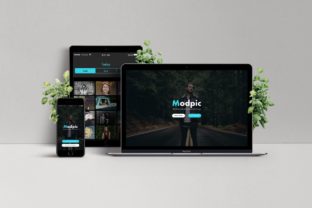
Modpic Creative App Page Sketch Template: An Evaluation for Designers and Developers
When evaluating design resources for app page layouts, the Modpic Creative App Page Sketch Template often appears alongside options that promise a modern and clean theme. For designers and developers who work with Sketch, this template positions itself as a complete starting point rather than just a collection of components. Understanding what it offers, where it excels, and where it may fall short is essential before committing to it for a project. This evaluation focuses on helping you decide whether it aligns with your workflow and goals, rather than simply describing its features.
What the Modpic Creative App Page Sketch Template Provides
The Modpic Creative App Page Sketch Template is a pre-built design file created for Sketch, a vector-based design tool widely used in UI and UX work. It delivers a full app page layout with a clean, modern aesthetic intended to serve as a foundation for mobile or web application interfaces. The template includes a high-quality Sketch file, uses free Google Fonts to keep licensing straightforward, maintains sharp pixel quality for precise rendering, and offers fully editable layers and layouts so that every element can be adapted.
This combination makes it a candidate for designers who want to skip the blank canvas stage and move directly into customization. For developers who also handle design work, it can reduce the time needed to produce a polished app page mockup. The template is not a design system or a UI kit in the traditional sense; it is a single page layout that can be used as a reference or a starting point for a broader project.
Why Designers and Developers Consider This Template
Several practical reasons drive interest in the Modpic Creative App Page Sketch Template. Efficiency is one of the most common motivations. Starting from a well-structured template eliminates the need to build common UI elements from scratch, which can save hours on initial layout work. Consistency is another factor. A template that follows a unified theme helps maintain visual harmony across screens, which is especially important when presenting concepts to clients or stakeholders.
The promise of a modern and clean theme also appeals because such a style tends to age well and adapt to various branding requirements. Free Google Fonts remove font licensing concerns, which is a practical advantage for teams working on multiple projects. Additionally, the editable layers and layouts mean that the template is not a rigid deliverable but a flexible asset that can be reshaped to fit specific needs.
However, interest alone does not guarantee a good fit. Evaluating the template against specific project needs and workflow constraints is necessary to avoid mismatched expectations.
Benefits of Using This Template
Time savings. A pre-built layout means you can begin customizing immediately rather than spending hours on structure and spacing. For tight deadlines, this can be a significant advantage, especially when producing multiple mockups or iterations.
Professional output. The template is designed with sharp pixel quality and clean layers, which helps produce results that look polished without requiring advanced design skills. This is particularly useful for freelancers or small teams that need to present work that competes with larger studios.
Flexibility through editable layers. Because every layer and layout is editable, you are not locked into the original design. Colors, typography, spacing, and component positions can all be adjusted to match your brand or product requirements. This reduces the risk of the template feeling generic after customization.
Font simplicity. Free Google Fonts are widely supported and easy to implement in both design and development, reducing friction during handoff. Developers can quickly identify and load the fonts used in the template without worrying about licensing fees or availability.
Learning resource. For designers who are newer to Sketch, studying a well-organized file with editable layers can help build understanding of layout structure, grouping, and styling conventions.
Tradeoffs and Limitations to Consider
No template is without tradeoffs, and the Modpic Creative App Page Sketch Template is no exception. The most obvious limitation is its dependence on Sketch. If you or your team primarily use Figma, Adobe XD, or another tool, this template will require a conversion process that may introduce inconsistencies. Even with conversion tools, layer styles, symbol behavior, and text rendering may not transfer perfectly, potentially degrading the quality of the final output.
Another consideration is that templates, by nature, follow a specific design direction. While the layers are editable, the overall layout and visual hierarchy are predefined. If your project requires a highly unconventional or brand-specific structure, you may find yourself modifying more than expected, which can reduce the time-saving benefit. In some cases, starting from a blank canvas may actually be faster if you have to undo a significant portion of the template.
There is also the question of originality. Using a template means your app page may share structural similarities with other projects that use the same file. For teams that prioritize unique visual identity or are building a product with distinct branding, this is a factor worth weighing. While customization can differentiate the final output, the underlying layout may still feel familiar to experienced eyes.
Finally, the template assumes a certain level of proficiency with Sketch. Designers who are new to the tool may need to spend time learning how to navigate and edit the file effectively, which can offset some of the efficiency gains.
Scenarios Where This Template Is a Strong Fit
The Modpic Creative App Page Sketch Template works well in several common situations:
- Freelance designers who need to deliver app page mockups quickly and professionally, especially when working with multiple clients who have varying brand guidelines. The template provides a reliable baseline that can be adapted without starting over each time.
- Small design teams that want a consistent starting point for app projects but lack the resources to build a full design system from scratch. Using a template reduces the overhead of repetitive layout decisions.
- Developers who double as designers and need a reliable layout that they can customize without deep design expertise. The clean structure and editable layers make it approachable for those whose primary skill set is code.
- Agencies producing concept work or pitches where speed and visual polish are prioritized over complete originality. A polished template helps create compelling presentations quickly.
- Beginners learning Sketch who want to study how a clean, modern app page is structured and practice editing layers and layouts. The template functions as both a resource and a learning tool.
In these cases, the template serves as a productivity tool that reduces startup time and provides a solid visual baseline. The decision to use it hinges on whether the efficiency gain outweighs the need for complete originality.
When Alternatives May Be Worth Considering
There are also situations where looking beyond this template makes sense:
- You do not use Sketch. If your workflow is built around Figma, Adobe XD, or another tool, the conversion effort may outweigh the benefits. Native templates for your primary tool are often a better choice, as they preserve layer behavior, symbols, and styling more accurately.
- You need a full design system. If your project requires a comprehensive set of components, patterns, and documentation, a single app page template may not be sufficient. A more extensive UI kit or design system with multiple screen types and reusable elements would serve you better.
- You prioritize unique branding. For products where visual differentiation is critical, starting from a blank slate or a highly customizable framework may be preferable to modifying a pre-built layout. Even with extensive editing, a template-based design may retain some of its original character.
- Your project has unconventional requirements. Apps with non-standard navigation, custom interactions, or specialized content layouts may not map well to a template designed for common use cases. In such scenarios, a custom layout will likely produce a better result.
- You are on a tight budget. While the template is a paid resource, there are free alternatives available that may meet basic needs, though they often lack the polish, editability, and support of a premium file. Evaluating the cost against the time saved can help clarify the value.
Evaluating these scenarios honestly can help you determine whether the template aligns with your actual workflow and goals. There is no universal answer, and the right choice depends on your context.
Practical Decision-Making Insights
Choosing whether to use the Modpic Creative App Page Sketch Template comes down to a few key questions that help clarify your priorities:
- Is Sketch your primary design tool? If yes, the template integrates naturally into your workflow. If not, consider the conversion cost carefully, as it may negate the efficiency advantage.
- Do you need a complete app page layout or just components? A full layout is useful for mockups and presentations, but if you are building a design system, individual components or a UI kit may be more valuable than a single page design.
- How much customization will you require? If your brand or product has specific visual requirements, ensure that the template's structure can accommodate them without excessive rework. Review the file before purchasing to gauge the level of effort needed.
- What is your deadline? For short timelines, templates offer a clear speed advantage. For longer projects with room for iteration, custom design may yield a more tailored result that better reflects your product's identity.
- What is your budget for design resources? Compare the cost of this template against the time it saves you. For many professionals, the investment pays for itself in reduced hours, but for others, a free alternative may suffice.
These questions are not about finding a right or wrong answer but about understanding the tradeoffs in your specific context. A template that serves one designer perfectly may frustrate another, depending on workflow and priorities. The goal is to make an informed choice that supports your productivity without compromising the quality or uniqueness of your work.
Setting Realistic Expectations
It is also helpful to set realistic expectations about what a template can and cannot achieve. The Modpic Creative App Page Sketch Template provides a strong foundation, but it does not replace the need for thoughtful design decisions. You will still need to adapt the layout to your content, choose appropriate imagery, and ensure that the final design aligns with user needs and accessibility standards. The template is a tool, not a solution in itself.
Similarly, while the template promises sharp pixel quality, the final output depends on how you customize and export it. Pay attention to layer management, text rendering, and export settings to maintain that quality through to development. Testing the file on your own system before committing to a project can help identify any issues early.
Another realistic point is that templates can sometimes create a false sense of completeness. A single app page layout does not cover the full scope of an application's interface. You will likely need to create additional screens, states, and variations beyond what the template provides. Consider whether the template gives you a strong enough starting point to extend those elements consistently.
Final Considerations for Your Decision
The Modpic Creative App Page Sketch Template is a practical resource for designers and developers who work in Sketch and need a clean, modern app page layout that can be edited and adapted quickly. Its benefits are most apparent when you need to produce professional-looking results efficiently, and its limitations are primarily tied to tool dependency, the inherent constraints of using a pre-built design, and the need for additional customization to achieve a unique result.
By evaluating your own workflow, project requirements, and customization needs, you can decide whether this template supports your goals or whether a different approach would serve you better. In many cases, it offers a balanced combination of quality, flexibility, and convenience that makes it a worthwhile consideration for app page design work. The key is to approach it as a starting point rather than a finished product, and to invest the necessary time in customization to make it your own.
Ultimately, the value of any design template lies in how well it fits your process and how effectively you can adapt it to your needs. By weighing the benefits and tradeoffs described here, you can make a decision that supports both your productivity and the quality of your work.